
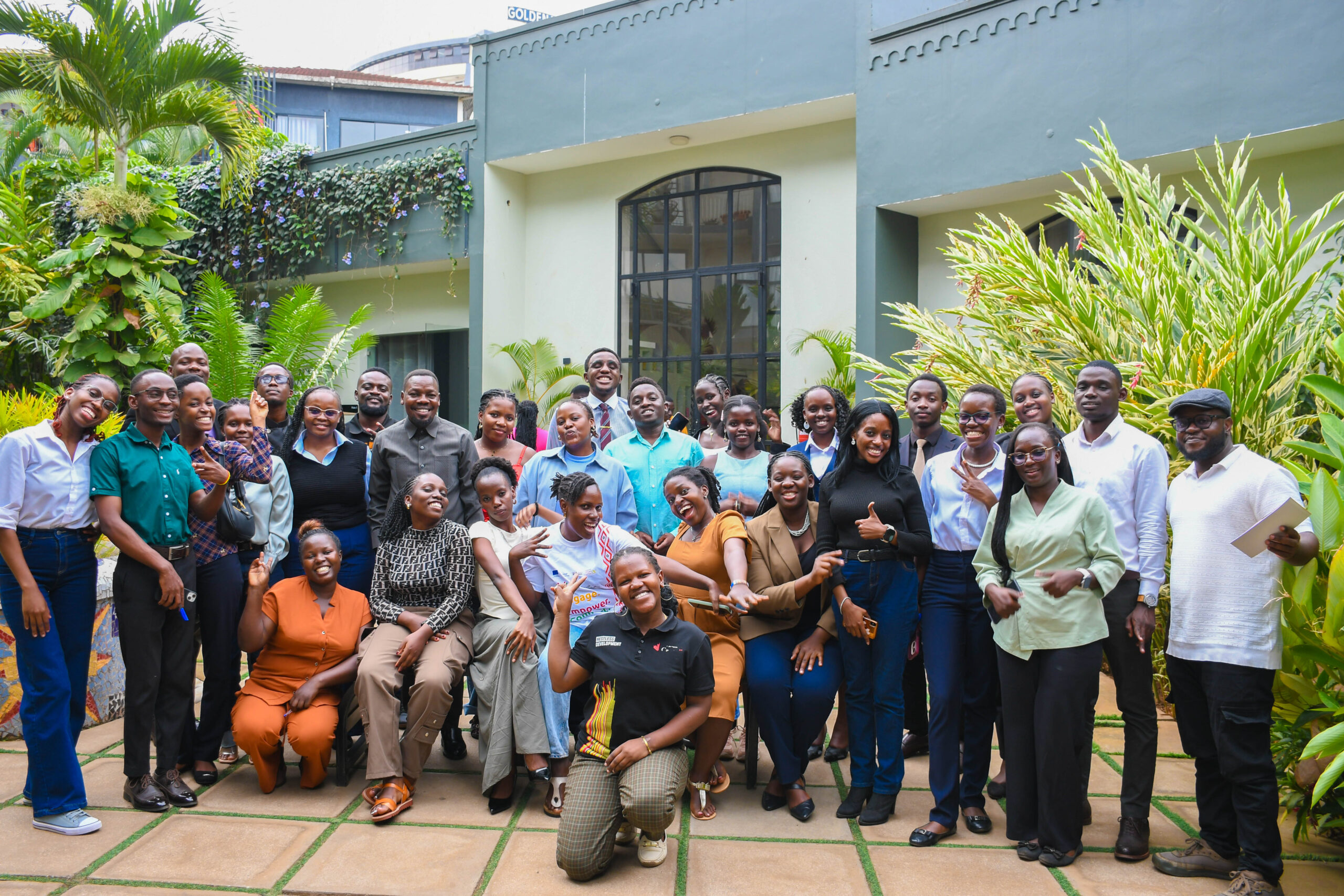
A seat at the table means little if young people cannot enter the room or influence what happens inside it. Meaningful participation requires space to speak honestly, resources to act, and power to shape decisions. That ambition guided the Uganda Youth Power Hackathon, where participants brought their experiences, challenged barriers, and developed proposals for change.
Held on 19th June 2026 at Fairway Hotel in Kampala, the hackathon brought together 47 participants under the AU–EU Youth Voices Lab programme. Young civic and political leaders, activists, and social innovators joined stakeholders in a youth-led, safe space designed for open discussion and practical solution-building.
Continental research from the AU–EU Youth Voices Lab helped participants examine their experiences through the idea of “participation theatre”: being visibly included in consultations, meetings, or photographs without having real influence. Participants described opportunities to speak that offered no clear way for their contributions to shape policy or action.
Youth researcher Edmund Ayesigwa highlighted the gap between commitments and implementation. “For meaningful participation, real power must be redistributed.” His message brought the discussion back to enforcement and accountability: frameworks alone cannot deliver meaningful participation unless institutions act on them and share power.”

The young people in the room spoke with a shared concern: young people have limited access to the decisions and resources that shape their lives. They described how political connections can determine whose voices are heard, while fear of repercussions can prevent others from speaking openly. They also raised concerns about corruption and weak accountability for resources intended to support young people.
They also identified gaps in civic education and social attitudes that dismiss young people’s opinions. Highlighting additional exclusions affecting young women and young people with disabilities, emphasising that youth engagement must deliberately reach those whose voices are often overlooked.
Working in teams, they developed proposals to address these barriers. Stronger, legally guaranteed representation was a central priority. They called for reforms that would give young people and marginalised groups a more secure place in decision-making structures, alongside stronger youth councils with greater independence, resources, and authority.

Okot Olaa, Secretary for Legal Affairs at the National Youth Council of Uganda, explained why deliberate legal protections matter. “Young people and other marginalised groups cannot meaningfully participate in governance unless there are deliberate legal mechanisms that guarantee their representation.” Participants linked this call to practical influence over decisions and budgets, with accountability for how that power is exercised.
Accessible civic education was another priority. The participants proposed community-based learning delivered by youth-led organisations, particularly for young people outside formal education and in underserved areas. They also called for stronger civic education in schools and practical information about rights, public institutions and ways to hold leaders accountable.
On public resources, it was proposed that transparent tracking of youth-targeted funding be supported by youth-led monitoring. They called for documented concerns about misallocation to be taken to oversight institutions and for officials to make public commitments that communities could follow up.
Collective action connected these proposals. The young leaders called for coalitions linking youth-led organisations, student bodies, and professional associations around shared priorities. Regular online and in-person engagements could help them coordinate advocacy and sustain momentum.
As one participant put it: “If we want meaningful change, we must work collectively across movements, organizations, and communities.” This approach offers a way to bring separate concerns together, share evidence, and build consistent pressure for institutions to respond.
The proposals could inform advocacy and programming in Uganda while contributing to African Union policy dialogue and exchanges across Africa and Europe through the AU–EU partnership.
Recommended next steps include sharing the solutions with institutions and partners and establishing continued coordination among participating organisations. These are opportunities for follow-up, rather than reforms already achieved.
Closing the hackathon, Restless Development Uganda Hub Director Gabriel Iguma encouraged sustained commitment. “Young people are often criticised for being impatient or outspoken, yet they are trying to solve problems they did not create.”
He emphasised that no single event or organisation has all the answers, and encouraged participants to keep learning, refining their approaches and acting together.
The call to decision-makers and partners was to resource youth-led organising, share decision-making power and establish accountable ways to respond to young people’s priorities. The ideas developed at the hackathon provide a starting point. Sustained support and collective action will determine how they influence what happens next.
